 Abhishek Sinha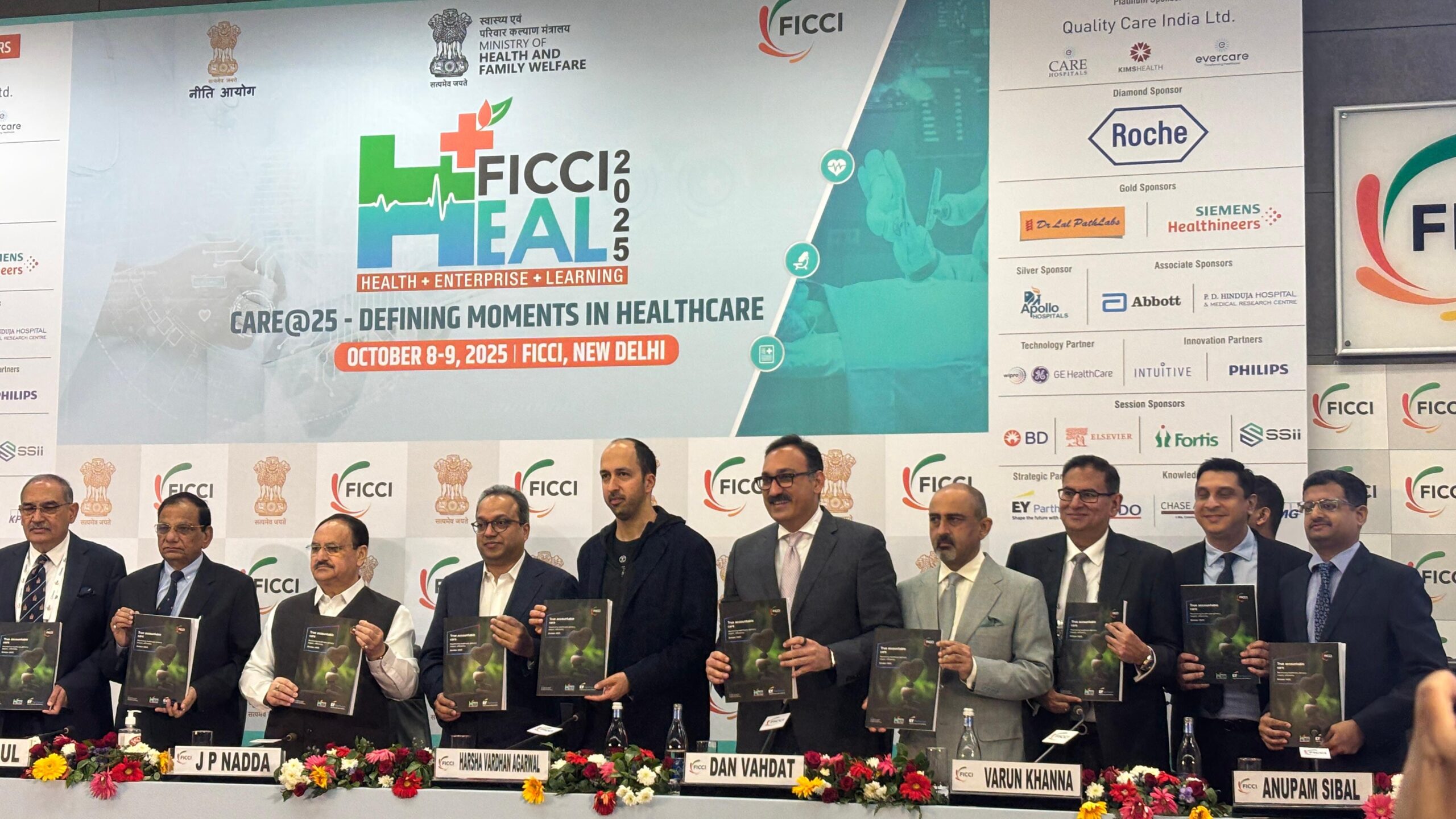
By Niveshvani Bureau | October 10, 2025
New Delhi: A new joint report by FICCI and EY-Parthenon reveals that transparency, quality, and accountability are emerging as top priorities for India’s healthcare consumers. The report titled “True Accountable Care: Maximizing Healthcare Delivery Impact, Efficiently” finds that 83% of patients in India now seek objective, easily accessible information about healthcare services, and nearly 90% are willing to pay more for certified and standardized quality.
India Leads in Efficiency, But Affordability Still a Challenge
According to the EY-Parthenon Healthcare Productivity and Performance (HPP) Index, India’s healthcare efficiency score has jumped from 1.9 in 2003 to 5.8 in 2023, outpacing even high-income nations. This is largely due to India’s strong cost advantage, which helps the system deliver healthcare at a fraction of global costs.
However, despite this progress, affordability remains fragile. The average private hospitalization cost of around ₹58,000 still exceeds the annual household consumption for nearly half of Indian families and nearly 70% of rural households. About 25–30% of India’s “missing middle” continues to remain uninsured, relying heavily on out-of-pocket spending.
While healthcare delivery offers a 13% average return on capital employed (RoCE), it still lags behind sectors like FMCG (25%) and retail (26%).
What Patients and Clinicians Want
The report highlights a growing convergence between patients and clinicians on the need for transparency and standardized care.
- 83% of patients want verified hospital quality data and transparent ratings.
- 90% of these patients said they would pay extra for certified quality.
- 90% of clinicians emphasized the importance of standardized clinical pathways.
- 65% of doctors supported measuring and sharing outcomes publicly, while 49% identified digital tools such as Electronic Health Records (EHRs) as key enablers for real-time quality monitoring.
The report recommends digital integration, quality-linked reimbursements, and a central authority to monitor, enforce, and reward clinical excellence across providers.
India’s Healthcare Expansion — Growth and Complexity
The study notes that India’s healthcare infrastructure has doubled in capacity since 2000, with hospital beds rising from 0.7 to 1.3 per 1,000 people, and MBBS seats increasing fivefold.
- Cath labs per capita have grown 58 times, and linear accelerators (for cancer therapy) have increased 17 times in the last two decades.
- Despite this, India still ranks low globally in hospital bed density, and healthcare access remains uneven across regions.
If current trends continue, India’s hospitalization needs could increase 2.5–3 times by 2047, requiring 20–30 lakh additional beds and pushing healthcare spending to 6–7% of GDP. However, adopting a long-term, outcome-based care model could flatten the curve and keep spending near 5% of GDP.
Experts Speak
Kaivaan Movdawalla, Partner and National Healthcare Leader, EY-Parthenon India, said:
“The next two decades will test the resilience of India’s healthcare system. Patients are ready for transparency, and clinicians support standardized reporting — this alignment gives India a chance to transform its system into one that rewards quality and efficiency.”
Akshay Ravi, Partner, Healthcare Practice, EY-Parthenon India, added:
“India must now move from a one-size-fits-all model to a segmented, quality-focused system supported by reimbursement frameworks that reward better outcomes.”
Varun Khanna, Co-Chair, FICCI Health Services Committee and Group MD, Quality Care India Limited, noted:
“The next phase of India’s healthcare evolution must focus on value, not volume — aligning incentives around outcomes, patient experience, and long-term health.”
Dr. Harsh Mahajan, Chair, FICCI Health Services Committee and Founder, Mahajan Imaging & Labs, emphasized:
“By advancing accountable care principles, India can build a healthcare system where quality, trust, and value-based outcomes define success.”
Policy and Digital Pathways Ahead
The report proposes a 7C Framework to build an accountable, outcome-based healthcare ecosystem:
Cohorting & Segmentation | Clinical Excellence | Cost Consciousness | Care Reimbursement | Care Coordination | Consumer Empowerment | Connected Ecosystem.
It also recommends adopting a VALUE digital model, integrating advanced health records, AI-enabled decision systems, interoperability through ABHA, and real-time dashboards to track national performance indicators.
Conclusion
The FICCI–EY Parthenon report underlines a pivotal shift in India’s healthcare — from volume-driven delivery to value-driven care. As patients demand transparency and clinicians endorse standardized outcomes, the roadmap is clear: India’s future in healthcare lies in trust, technology, and accountability.