 ANKUR TYAGI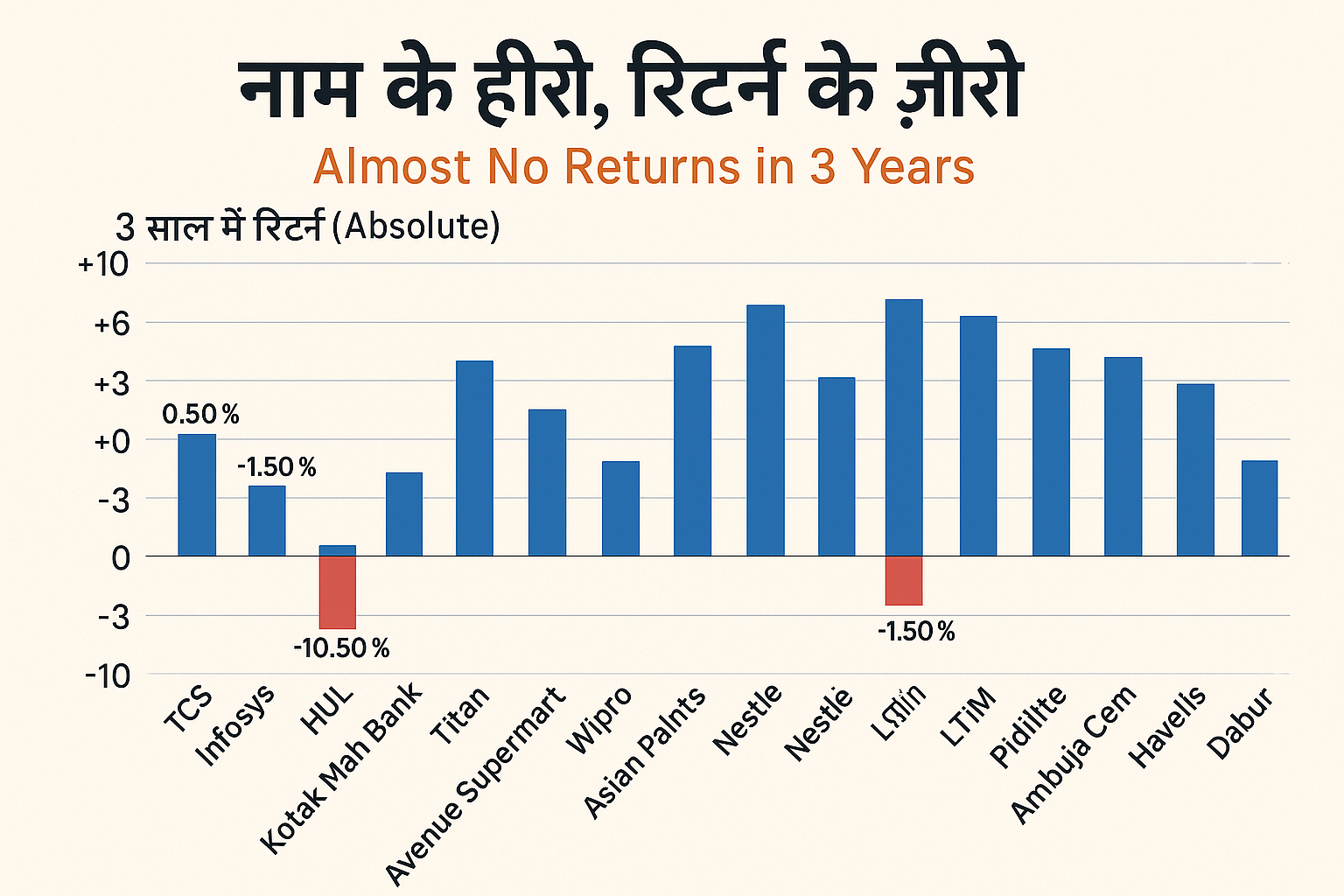
For retail investors, the last three years have been a reality check. Some of India’s most celebrated large-cap names—often considered safe bets—have delivered almost zero to single-digit absolute returns between 2022 and 2025.
Despite their brand power and market dominance, these stocks struggled to beat even a basic fixed deposit, leaving long-term investors questioning whether “blue-chip” still guarantees wealth creation.
3-Year Return Snapshot (Absolute)
- TCS: +0.50%
- Infosys: +2.50%
- HUL: –1.50%
- Kotak Mahindra Bank: +3.50%
- Bajaj Finserv: +7%
- Titan: +8%
- Avenue Supermarts (D-Mart): +2%
- Wipro: +7.50%
- Asian Paints: –10.50%
- Nestle India: +8%
- LTIMindtree (LTIM): +5%
- Pidilite: +3%
- Ambuja Cements: +4.50%
- Havells India: +6%
- Dabur: –3%
Why Did Big Names Falter?
- Valuations at Peak – Many of these stocks were trading at premium multiples in 2021–22. Earnings growth didn’t keep pace with lofty valuations.
- Global Headwinds – IT majors (TCS, Infosys, Wipro, LTIM) struggled due to weak global tech spending and slowdown in outsourcing demand.
- Consumption Slowdown – FMCG and discretionary plays (HUL, Dabur, Asian Paints, Titan) saw margin pressures from inflation and muted rural demand.
- Banking & Finance Underperformance – Kotak and Bajaj Finserv lagged peers like ICICI Bank and HDFC Bank in delivering growth momentum.
Investor Lesson: Brand ≠ Returns
These stocks are “heroes in name, but zero in returns” for the last three years. While they remain fundamentally strong, their muted performance highlights a key truth:
👉 Even large, well-managed companies can go through long phases of underperformance when valuations are stretched and growth drivers weaken.
Bottom Line
For investors, this is a reminder to:
- Avoid overpaying for quality stocks.
- Diversify beyond blue-chips into sectors showing real momentum.
- Regularly review portfolios instead of relying on brand reputation.
In the Indian stock market, being popular doesn’t always mean being profitable.

 Abhishek Sinha